
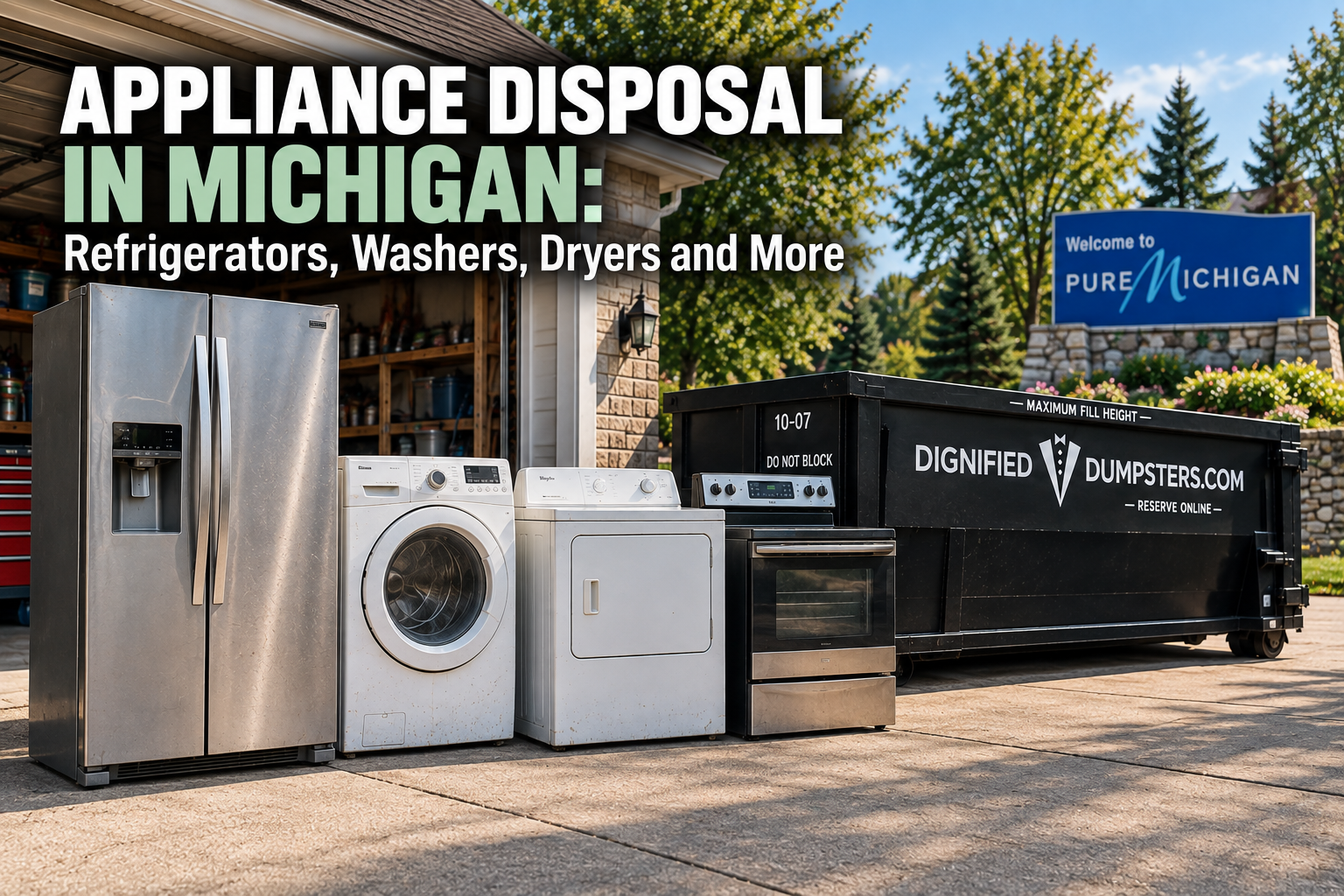
Appliance Disposal in Michigan: Refrigerators, Washers, Dryers and More
Getting rid of an old appliance isn’t always as simple as dragging it to the curb.
Refrigerators and freezers can contain regulated refrigerants. Washers and dishwashers may still contain water. Some appliances are valuable as scrap metal, while others may qualify for recycling, retailer haul-away, utility programs or donation.
If you’re planning a renovation, replacing appliances or cleaning out an entire home, understanding appliance disposal in Michigan can help you choose the safest—and often easiest—way to get rid of everything.
Here’s what Michigan homeowners should know before disposing of refrigerators, freezers, washers, dryers, dishwashers, stoves and other household appliances.
Not Sure If Your Appliance Can Go in the Dumpster?
Don’t guess. Call 734-808-1466 and we’ll tell you what can go in and what needs separate disposal.
Check AvailabilityCall for Same-Day DeliveryCan You Throw Away Old Appliances in Michigan?
Michigan residents have several possible options for unwanted appliances:
- Donate appliances that still work
- Use a retailer’s haul-away program when buying a replacement
- Recycle appliances through a scrap-metal or appliance recycling facility
- Check for utility-sponsored appliance recycling programs
- Arrange bulk pickup through your municipality or waste hauler
- Dispose of eligible appliances as part of a larger home cleanout
Michigan EGLE encourages residents to consider donation when an appliance remains usable and notes that retailers frequently provide recycling or disposal services when customers purchase replacements.
However, refrigerators, freezers and other appliances containing refrigerant require an extra step.
How to Dispose of a Refrigerator in Michigan
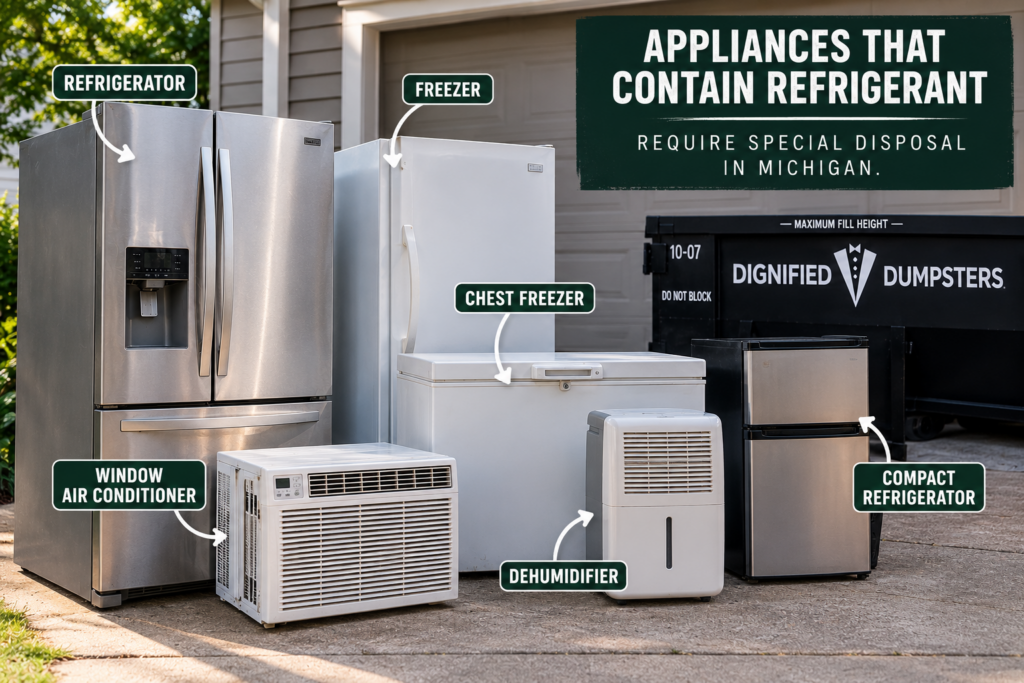
Refrigerators are one appliance you shouldn’t simply treat as ordinary household junk.
Most refrigerators contain refrigerants in their cooling systems. Michigan EGLE explains that refrigerants must be properly removed before refrigerant-containing appliances are disposed of, and disposal facilities commonly require proof that this has been done.
That includes appliances such as:
- Refrigerators
- Freezers
- Window air conditioners
- Dehumidifiers
- Other refrigerant-containing appliances
Don’t Remove the Refrigerant Yourself
This isn’t a DIY job.
Michigan EGLE states that refrigerant must be removed by an EPA-certified technician. After removal, the technician can mark the appliance to indicate that the refrigerant has been properly removed.
Before hauling an old refrigerator anywhere, contact the recycler, landfill, transfer station or waste company you intend to use and ask about its requirements. EGLE specifically recommends checking site-specific procedures because acceptance policies vary.
Can a Refrigerator Go in a Dumpster?
Refrigerant-containing appliances require special handling before normal disposal or scrap-metal recycling.
If you’re renting from Dignified Dumpsters, contact us before putting any refrigerator, freezer, air conditioner or other refrigerant-containing appliance into the dumpster.
We’ll tell you whether the appliance can be accepted and what preparation is required.
That’s an important distinction because a refrigerator that has been properly prepared for disposal is very different from one that still contains refrigerant.
You can see more restricted materials in our guide to What Cannot Go in a Dumpster in Michigan?.
How to Dispose of a Freezer in Michigan
Freezers generally need to be handled the same way as refrigerators.
Because they contain refrigerant, you should:
- Empty the freezer completely.
- Unplug and defrost it.
- Remove all food and standing water.
- Check whether your utility company offers appliance recycling.
- Otherwise, find a recycler or disposal facility that accepts refrigerant-containing appliances.
- Confirm whether refrigerant removal is included or must be completed beforehand.
Don’t puncture refrigerant lines or attempt to release the refrigerant yourself.
How to Dispose of a Washer in Michigan
Washing machines are much simpler.
Because a typical washing machine doesn’t have a refrigerant system, your primary concerns are getting the remaining water out and finding an appropriate reuse, recycling or disposal option.
Before getting rid of a washer:
- Disconnect the power.
- Turn off and disconnect the water supply.
- Drain the hoses.
- Remove as much standing water as possible.
- Secure loose hoses and components.
Because washing machines contain a significant amount of metal, recycling may be a better option than disposal when one is available locally.
A working washer may also be worth donating or giving away.
How to Dispose of a Dryer in Michigan
Dryers can often be donated, recycled as scrap metal, picked up as a bulk item or disposed of through an appropriate waste facility.
Before moving one:
Electric dryer: Unplug it and disconnect the vent.
Gas dryer: Have the gas supply safely shut off and disconnected. If you’re uncertain how to do that safely, use a qualified professional.
Never cut or damage a gas line just to remove an appliance quickly.
If your washer and dryer still work, consider donation or resale before disposal.
What About Dishwashers?
Dishwashers don’t normally contain refrigerant, but they can hold more water than homeowners expect.
Before disposal:
- Shut off the power
- Shut off the water supply
- Disconnect the water line
- Disconnect the drain
- Allow residual water to drain
- Secure loose hoses
If you’re removing a dishwasher during a kitchen remodel, it can often be handled alongside other accepted renovation debris—but always verify your dumpster company’s rules first.
How Do You Dispose of a Stove or Oven?
Most conventional ranges and ovens don’t contain refrigerant, making disposal relatively straightforward.
Electric models should be disconnected from power.
For a gas range, the gas supply needs to be shut off and the appliance safely disconnected before removal.
Because ranges contain substantial amounts of recyclable metal, check local scrap-metal recycling options before sending one for disposal.
What About Microwaves?
Microwaves are a little different.
Although they don’t contain refrigerant, they contain electrical and electronic components. Depending on your community, a microwave may be accepted through an appliance recycler, scrap-metal recycler or electronics recycling program.
Michigan maintains an electronics recycling program and lists registered electronics recycling facilities, although individual facilities determine what products they accept.
Always check with the recycler before making the trip.
Check Your Utility Company Before Paying to Get Rid of a Refrigerator
This is one step Michigan homeowners can easily overlook.
Your old refrigerator might actually be worth money.
For example, Consumers Energy’s Appliance Recycling Program currently offers eligible electric customers free pickup and a $50 rebate for qualifying working refrigerators and freezers. Eligible full-size refrigerators and freezers must be working, empty and generally between 10 and 30 cubic feet.
Consumers Energy also currently offers smaller incentives for qualifying room air conditioners, dehumidifiers and compact refrigerators/freezers.
DTE also has an appliance recycling program for eligible residential electric customers that includes qualifying refrigerators, freezers, dehumidifiers, room air conditioners and smaller refrigerators/freezers.
Check your utility’s current program before paying someone to remove a working refrigerator or freezer.Eligibility, rebates and program availability can change.
What If the Appliance Still Works?
Don’t automatically throw it away.
A working refrigerator, stove, washer or dryer may still have plenty of life left.
Consider:
Selling it. Marketplace-style resale can work particularly well for newer appliances.
Giving it away. Someone may be willing to pick it up, eliminating the hauling problem altogether.
Donating it. Some charities and reuse organizations accept working appliances, although requirements vary.
Retailer haul-away. If you’re buying a replacement, ask whether the retailer will remove the old appliance during delivery.
Michigan EGLE specifically encourages reuse and donation when an unwanted appliance remains usable.
Can Appliances Go in a Dignified Dumpsters Container?
Some can, but don’t assume every appliance is acceptable.
The biggest distinction is whether the appliance contains refrigerant.
For example, washers, dryers, stoves and dishwashers don’t present the same refrigerant issue as refrigerators, freezers, air conditioners and dehumidifiers.
If you’re doing a large home, garage, basement or estate cleanout, contact Dignified Dumpsters before loading appliances. We’ll tell you exactly what is acceptable and whether any preparation is required.
That prevents an unwanted surprise after the dumpster is already loaded.
Appliance Disposal During a Whole-House Cleanout

This is where having a plan can save a lot of time.
Imagine cleaning out an older house and finding:
- A refrigerator in the kitchen
- A chest freezer in the basement
- An old washer and dryer
- A broken microwave
- Furniture
- Mattresses
- Boxes
- Shelving
- Household junk
- Old paint and chemicals in the garage
Those items don’t necessarily all belong in the same disposal stream.
A better strategy is to create three groups:
1. Specialty Disposal or Recycling
Set aside refrigerators, freezers and other refrigerant-containing appliances until you’ve confirmed the appropriate handling requirements.
Also separate electronics, hazardous chemicals, batteries and other restricted materials.
For paint and chemicals, see our guides to hazardous waste disposal in Washtenaw County and hazardous waste disposal in Livingston County.
2. Donate or Recycle
Pull out working appliances and other usable items that could be donated, sold or reused.
Metal appliances may also have local scrap-recycling options.
3. Dumpster Debris
Once specialty items have been separated, your dumpster can handle the accepted household junk, furniture, remodeling debris and other materials from the project.
This approach keeps the cleanout moving without mixing items that require different handling.
Appliance Disposal During a Kitchen or Laundry Room Remodel

Replacing appliances often happens at the same time as a much larger renovation.
Maybe you’re removing:
- Kitchen cabinets
- Countertops
- Flooring
- A dishwasher
- A stove
- An old refrigerator
- Laundry-room shelving
- A washer and dryer
Instead of figuring out where every piece goes after demolition starts, make the disposal plan beforehand.
Separate anything requiring specialty recycling or refrigerant handling, then use your dumpster for the accepted renovation debris.
If you’re working in Southeast Michigan, Dignified Dumpsters provides convenient local dumpster rental throughout Washtenaw County and Livingston County.
The Bottom Line on Appliance Disposal in Michigan
The best disposal method depends on what you’re getting rid of.
Refrigerators, freezers and other refrigerant-containing appliances need special handling. Michigan EGLE says refrigerant must be properly removed before disposal, with removal performed by an EPA-certified technician.
Washers, dryers, stoves and dishwashers are generally simpler, and donation or metal recycling may be worthwhile before choosing disposal.
And before paying someone to haul away a working refrigerator or freezer, check your utility provider. Some Michigan customers may qualify for free appliance pickup or an incentive.
If you’re tackling more than a single appliance, a dumpster can make the rest of a home cleanout or renovation considerably easier.
Dignified Dumpsters is a local, veteran-owned dumpster rental company serving communities throughout Washtenaw and Livingston Counties. Order online based on real-time inventory, or call 734-808-1466 if you have questions about whether an appliance can go into your dumpster.
Dumpster Rental Ann Arbor and Nearby Areas and Dumpster Rental Brighton and Nearby Areas
If you’re searching for Dumpster Rental Near Me, Dumpster Rental Ann Arbor, or Dumpster Rental Brighton, Dignified Dumpsters provides fast and reliable service across Washtenaw County and Livingston County.
Our dumpsters are driveway-friendly, easy to load, and perfect for home cleanouts, renovations, and landscaping projects.
Book your dumpster online today:
www.dignifieddumpsters.com
Or call 734-808-1466 and our team will help you choose the right dumpster for your project.
Need a Dumpster This Week?
We offer fast delivery, transparent pricing, and contractor-friendly service. Contact Dignified Dumpsters to find the right dumpster for your next job site.
Book Your DumpsterCall UsFAQs
Can I put a refrigerator in a dumpster in Michigan?
Don’t put a refrigerator or freezer into a dumpster without first checking with the dumpster company. Refrigerant-containing appliances require special handling, and Michigan EGLE says refrigerants must be properly removed before disposal.
Who can remove Freon from an old refrigerator in Michigan?
Refrigerant should be removed by an EPA-certified technician. EGLE notes that the technician can place a sticker on the appliance indicating the refrigerant has been removed.
Can a washing machine go in a dumpster?
Acceptance depends on the dumpster company and disposal facility. Washing machines don’t have the same refrigerant issue as refrigerators, but you should drain all remaining water and confirm acceptance before loading one.
Can a dryer go in a dumpster?
Depending on the dumpster company’s rules, dryers may be accepted. Electric dryers should be unplugged, while gas dryers need to be safely disconnected from the gas supply.
Can I recycle old appliances in Michigan?
Yes. Depending on the appliance and your location, options can include scrap-metal recycling, appliance recycling programs, retailer haul-away, municipal collection and utility-sponsored programs. EGLE recommends checking recycling and reuse options when available.
Will Consumers Energy pick up an old refrigerator?
Consumers Energy currently offers qualifying electric customers free pickup of eligible working refrigerators and freezers and a $50 rebate. Program requirements and incentives can change, so verify eligibility before scheduling.
What should I do with a refrigerator that still works?
Consider selling, donating or giving it away first. You should also check whether your electric utility offers an appliance recycling incentive before disposing of it.
Do I need to remove refrigerator doors before disposal?
Requirements vary by recycler, hauler and disposal facility. Ask the facility or pickup provider how it wants the refrigerator prepared rather than assuming the doors need to be removed.
Planning a Project? These Guides Will Help
- ✔️ Not sure what size you need? → What Fits in a 15 Yard Dumpster
- ✔️ Doing a large cleanout? → What Fits in a 20 Yard Dumpster
- ✔️ Comparing options? → Junk Removal vs Dumpster Rental
- ✔️ Working with heavy debris? → Concrete Dumpster Guide
Dumpster Rentals Near You
Serving Ann Arbor, Brighton, and surrounding areas: